Simulation · navigation sandbox
Status: SimulationOperate a simulated robot.
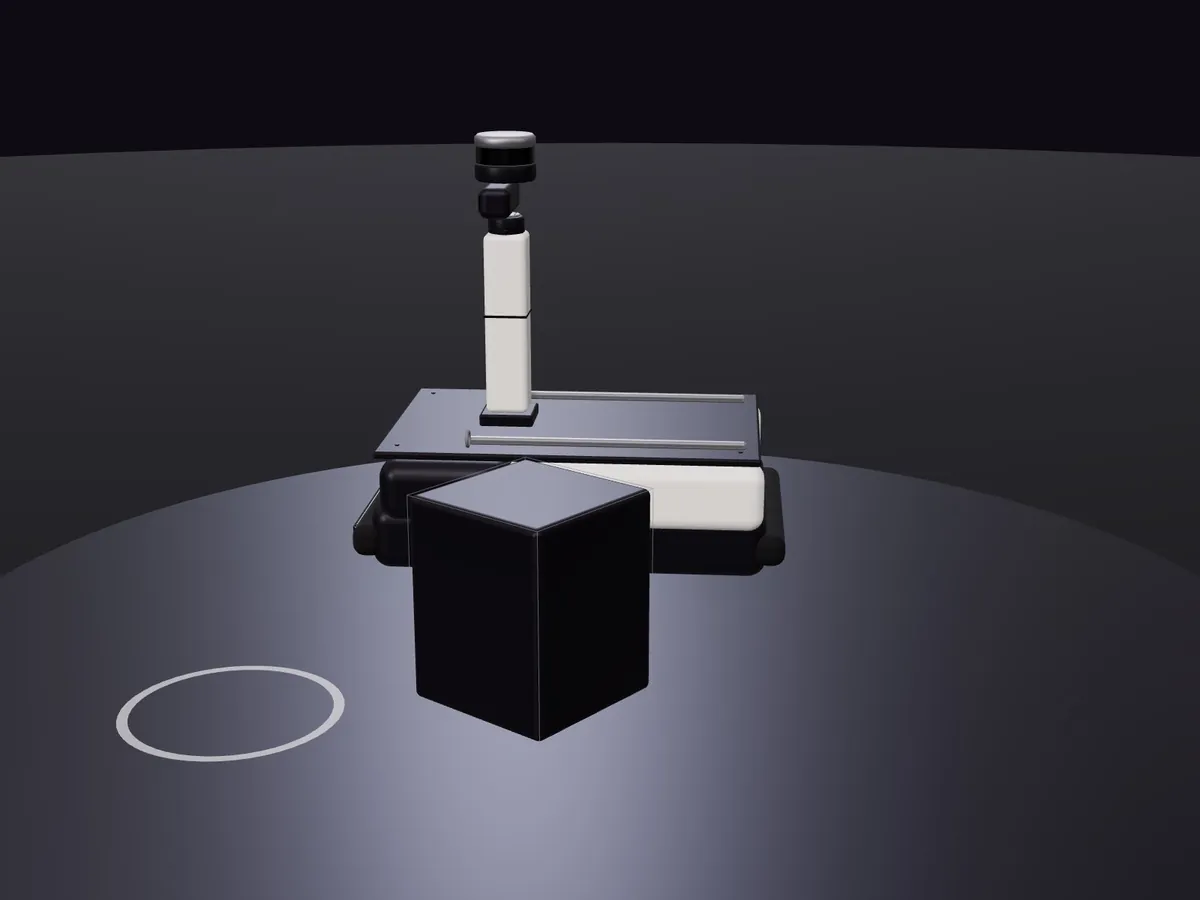
A small differential-drive robot on a 16 × 10 occupancy grid. Choose a task, pick a target, and watch it plan a collision-free route with A* and follow it — turning in place, then driving.
Simulation mode — no physical robot connected
Loading the simulation…
Click or tap a free cell to set a navigation target. With the grid focused, use the arrow keys to move the cursor and press Enter to set it.
- Robot
- Planned path
- Travelled
- Target
- Obstacle
Task status
Idle
Target 14,1
- Position X
- 0.50 m
- Position Y
- 0.50 m
- Heading
- 0°
- Distance
- 0.0 m
- Sim time
- 0.0 s
- Activity
- Standby
Readouts come from the simulation itself — idealised, no sensors.
Standing by at the start cell.
Everything here runs locally in your browser. It controls no hardware, uses an idealised model with perfect localisation and no sensor noise, and is not evidence of real-world robot autonomy.
01What it demonstrates
Small, real, and tested.
- Path planning around fixed obstacles on an occupancy grid
- A simple waypoint follower: turn toward the next cell, then drive
- Replanning when the target changes mid-run
- Explicit task states: idle, running, paused, complete, blocked
Task state machine
- Idle
- Waiting for a task.
- Running
- The engine is advancing.
- Paused
- Stopped mid-task; Start resumes exactly where it left off.
- Completed
- A finite task (navigate, inspect) has finished.
- Blocked
- The planner could not find a route to the goal.
02Validation workflow
From browser to hardware — only when justified.
The sandbox is step one. Each later step needs results from the one before it, and hardware only ever runs under direct human supervision.
- Stage 01
- Start00:00
- Stage 02
- Route00:01.4
- Stage 03
- Target00:04.3
- Source
- 1280 × 72030fps · 0.20MB
Still frame
- Step 1 · you can try this
Software experiments
Status: SimulationPlanners and models evaluated against recorded and synthetic data. The browser sandbox is the first of these.
- Step 2
Simulated environments
Status: ProposedThe same logic run in physics simulation (candidates: ROS 2, Gazebo), with failures logged and studied.
- Step 3
Supervised hardware prototypes
Status: ConceptOnly after simulation results justify it, and only under direct human supervision with stop controls.
03Method
Repeatable by design.
Deterministic and tested
The same inputs give the same run, so a failure can be reproduced and studied. The sandbox engine ships with unit tests.Human in the loop
Autonomy is supervised. A person can pause, stop or override, and plans are approved before they are executed.